

We explore real-life reformation here in this informed, online community.

Nigel Farage has been called the Donald Trump of the United Kingdom. He's an outspoken opponent of illegal immigration, the EU, fiat currency, unconstitutional governance, and corruption in government courts. The establishment hates him.
Earlier this year the banking system made it clear they could make an example of him, presumably as a warning to other conservative citizens. Banks proceeded to cancel him, silence him, hinder his ability to be a political leader, and ultimately tried to run him out of his own country. They simply de-banked him by cancelling his bank accounts. But Farage did not leave the country; he hired attorneys and fought back.
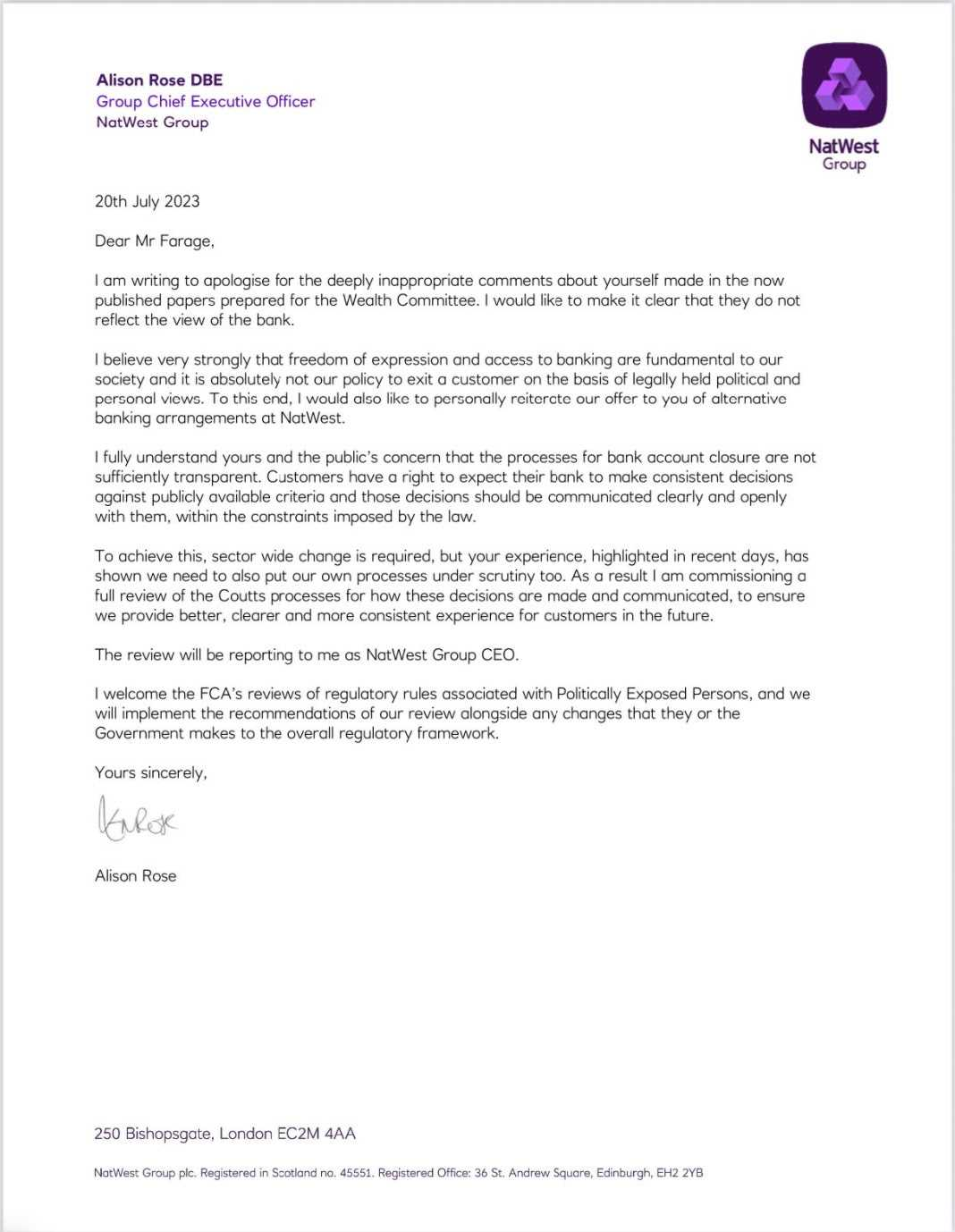
Recent legal inquiries show deceitful, fraudulent, and secret dealings by the banks. NatWest is the first to issue a formal apology, below.
Precious in the sight of the LORD Is the death of His godly ones.
Psalm 116:15
Rod Dreher asks, "I don’t understand why the government doesn’t deploy the army and shoot rioters until they stop. Philippe Lemoine, a Frenchman, says it’s not that simple."
Excerpt:
"We have let things rot for so long that, at this point, relying primarily on force to restore order would require a degree of violence far greater than what people realize and what is politically feasible.
It's possible to contain a riot using only moderate force when the number of police officers is high relative to the number of rioters, but when riots are so widespread and involve so many people because you have allowed this kind of things to happen for so long, that's just not possible and you have to use extreme violence to make up for the lack of manpower.
I know people on the Internet will say that it doesn't matter and that we should just do it, but the reality is that most of the people in charge are not prepared to use that kind of force and neither would most ordinary people if they saw ...
Even Marine Le Pen’s recent statements track this line: personal Islamic practice is compatible with the Republic; replacing French law with Sharia is not. French Muslims who are simply citizens practicing their "religious faith" “have no reason to worry” about a Le Pen election victory.
But can one be a practicing Muslim without demanding and practicing Sharia?